Why Mirage Mid Control Still Decides Half Your Premier Games

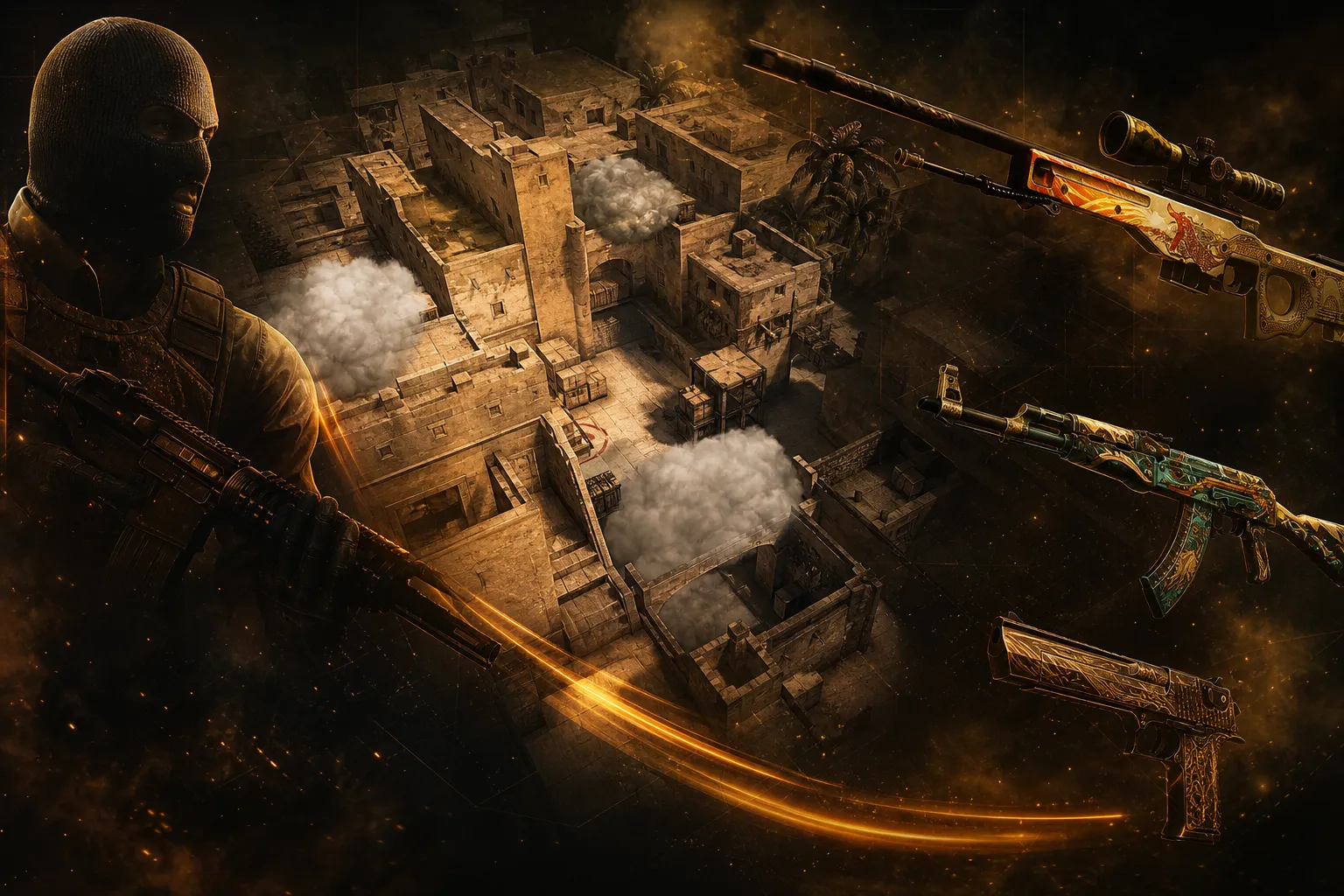
You can feel a Mirage round slipping the second your mid gets ignored. One flash goes high, the cat player dies, smoke blooms at Top Mid, and suddenly your whole Premier defense is stuck praying someone overpeeks Connector. That’s not just “bad mid control.” That’s usually the round.
Mirage is still the map where the team that owns mid owns the pace, the rotation timing, and half the info economy in the server. Source 2 didn’t change that. Subtick didn’t change that. If anything, CS2 made cleaner mid fights even more important because one sloppy jiggle or late smoke gets punished faster than people want to admit.
Mid is the map’s real switchboard
On Mirage, mid isn’t just a lane. It’s the switchboard for everything. T-side gets Connector pressure, Window pressure, cat control, and the option to split A or fake into B. CT-side gets the same thing in reverse: a chance to shut off rotations, deny vision, and force the attackers into predictable hits.
If you’ve played enough Premier, you already know the pattern. Your team loses Top Mid, gives up Window for free, and now the A anchor has to guess whether the hit is coming Ramp, Short, or a Connector split. That’s why good Mirage teams don’t “play the map.” They play mid first, then let the rest of the round happen around it.
And this is why you keep seeing pros obsess over it in big matches. Watch m0NESY on Mirage and it’s never just about the aim duel. He’s taking space, baiting utility, reading the response, and making the CTs split their attention. Same with donk on aggressive timings — if you give him one clean opening around Top Mid, he turns the round into a scramble.
The ugly truth: most Premier teams throw mid for free
Half the teams I queue into still treat Mirage mid like it’s optional. It isn’t. In 15-round halves, giving up mid control in 6 or 7 rounds is basically donating a win condition. The weird part is that teams don’t even lose it to fancy stuff. They lose it to lazy utility and bad spacing.
You see it all the time:
- One player swings Top Mid alone, no trade.
- Two teammates waste a full round holding smoke fade instead of taking space.
- Window gets smoked, but nobody contests Cat, so the T side just walks up Short anyway.
- Connector is left open after the first contact, which means the bombsite anchors get hit from two angles for free.
The CS2 economy makes this even more brutal. A CT side that loses mid twice in a row is suddenly forced into ugly 1900-2400 buy rounds, where you’ve got one rifle, maybe a single kit, and not enough util to re-fight the same space. That’s how you end up watching a $800 FAMAS round get deleted by AKs and a five-man exec with perfect spacing.
Why Source 2 made mid fights feel sharper
Subtick got people arguing about everything under the sun when CS2 launched, but Mirage mid is one of the places where it actually matters in a way you can feel. Shoulder peeks, counter-strafes, and those tiny timing windows at Top Mid or Window feel less forgiving now. You can’t half-commit to a peek and expect the server to save you.
That changes how mid control is taken. In CS:GO, you could sometimes get away with messy spam fights and weird timing cheats around the edge of smoke. In CS2, the round gets decided faster if your utility and movement aren’t tight. One late smoke on Window, one bad flash over Top Mid, one player staring at the ground while the cat lurker walks up — that’s enough.
It also makes the old Mirage staples even more annoying to defend if your team isn’t synced. The Window player has to respect Top Mid. Connector has to respect cat pressure. Jungle has to be ready for a split. If your comms are even a half-second late, the T side gets the exact opening they want.
The utility that actually matters, not the fake “setup” stuff
People love overcomplicating Mirage mid. You do not need six different “pro strats” to win it. You need a few clean pieces of utility and the discipline not to waste them at 1:50 because someone got bored.
Here’s the stuff that actually wins rounds:
- Top Mid smoke: cuts off the most obvious CT sightline and lets you work for Window or Cat without getting farmed.
- Window smoke: if it lands late, you’re already losing the timing battle.
- Connector pressure: even one player making CTs respect it changes the whole map.
- Cat flash: boring, yes, but boring wins rounds.
- Anti-repeek mollies: because the best Mirage players don’t take the first angle and leave.
On CT side, the simplest answer is usually the best: contest early with a flash, don’t donate Window for free, and don’t overstack one side unless you’ve got a read. The second your mid setup becomes passive and predictable, T side starts farming rotations. Then you’re stuck retaking with 20 seconds left, which is basically asking Mirage to punish you for being polite.
Mid control decides the rotation math
This is the part people miss when they talk about “taking space.” Mid control isn’t just about duels. It’s about forcing the other team to move first. Once you control mid, you control the information flow, and in CS2 information is still the cleanest way to win rounds without taking dumb fights.
Here’s the rotation math in plain English. If T side owns mid, the A anchor can’t fully trust Connector. The B player has to respect a late split. The Jungle player has to hold an awkward angle while also thinking about Cat. That’s three defenders mentally split across four lanes, and all because one part of the map got handed over.
That’s why Mirage mid control feels so much more important in Premier than in casual pugging. In lower-CS Rating games, people still take random duels and call it strategy. In higher lobbies, the team that gets mid first often dictates whether the round ends in a clean execute or a miserable, time-wasting rotate. It’s not glamorous. It’s just how the map works.
And yes, the best teams at Majors keep proving it. Whether it’s Astralis-era structure or newer teams built around explosive aim like Team Spirit, the principle never really changes: if your mid player is dead or ignored, your whole round gets squeezed.
If you’re losing Mirage, stop blaming “smokes” first
Most Mirage losses aren’t because your team forgot one lineup. They’re because nobody understood who was supposed to own mid at what moment. That’s the real issue. The smoke can be perfect and the round still dies if the player watching Top Mid gets isolated, or if your Connector player gets lazy and lets cat timing go unchecked.
If you want a cleaner Mirage half in Premier, stop playing mid like it’s a side quest.
- Take it early, or give it up with a plan.
- Trade your first contact.
- Don’t waste utility before anyone can actually use the space.
- Call the rotations fast, not when the bomb is already on site.
Mirage doesn’t reward the team with the fanciest aim. It rewards the team that understands how one smoke, one flash, and one dead mid player can flip the entire round. So the next time your squad queues it up, ask the real question: are you playing Mirage — or are you just handing mid to the other team and hoping they mess up?