
Why Your CT Rotations on Mirage Are Late by 3 to 5 Seconds

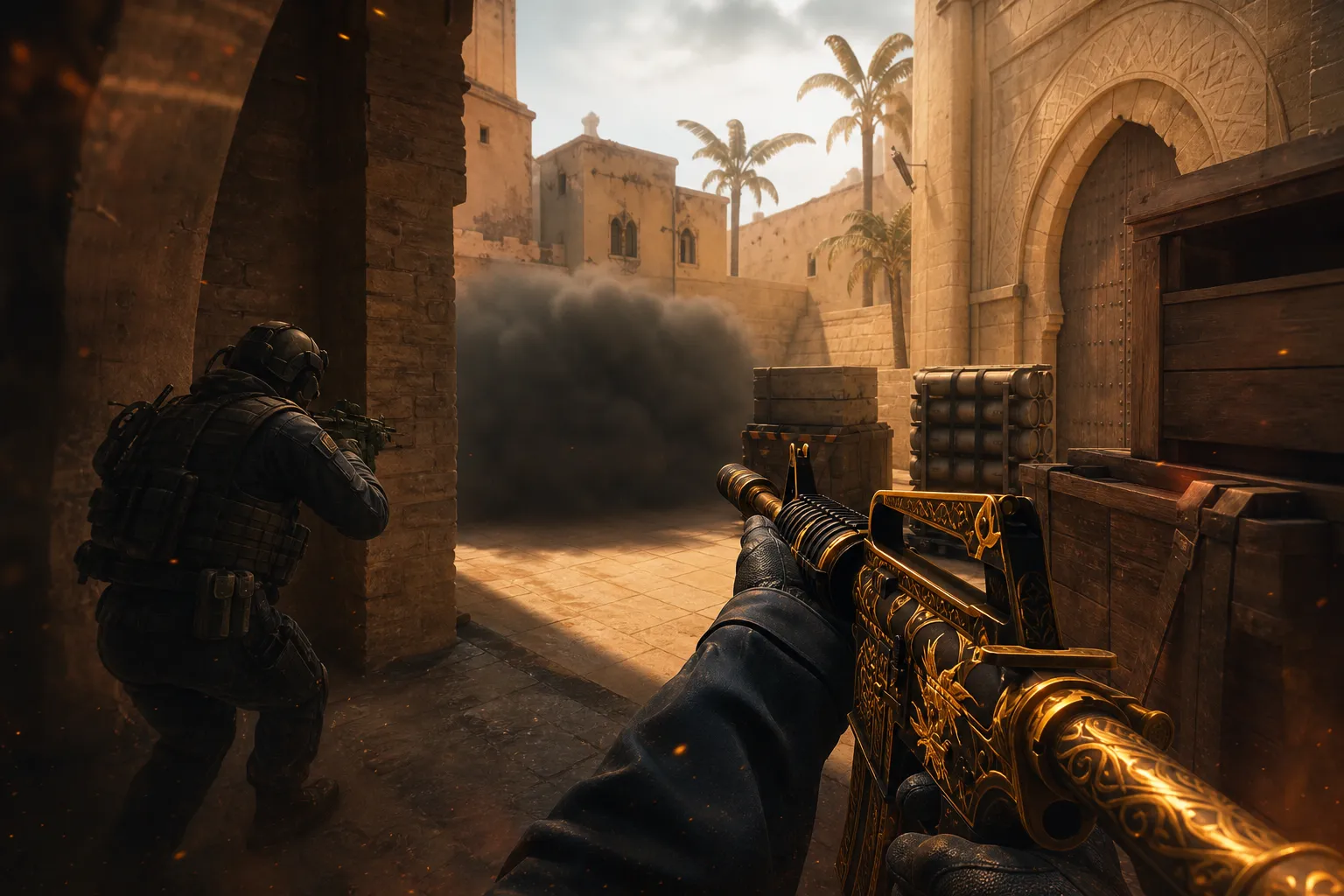
You’re on Mirage CT, the bomb’s been spotted A, your connector player calls for help, and somehow you’re still jogging out of spawn while the round is already halfway gone. That 3 to 5 second gap isn’t “bad luck.” It’s usually a bad read, a bad default, or both. On Mirage, late rotations are basically a tax you pay for misunderstanding where the real pressure is.
And yeah, in CS2 with subtick and cleaner movement feel, people act like rotations should be instant. They’re not. Good CT rotations are still about first contact, info quality, and not turning the map into a free mid-round for T side. If you’re consistently late by a few seconds, your team is probably bleeding map control before you even move.
Mirage punishes lazy CT instincts harder than most maps
Mirage looks simple until you actually have to defend it properly. A site, B site, mid, connector, window, catwalk, palace, ramp, underpass — every lane matters, and every lane can lie to you. One missed timing from connector or bench, and now you’re asking your rotator to cover 80% of the map with a Glock-sized clue.
The big trap is this: Mirage teaches bad CTs to rotate off sound instead of structure. If you hear one player in palace, you want to sprint A. If you hear two steps underpass, you want to collapse mid. That sounds sensible until the Ts show you fake pressure, keep you glued to the wrong bombsite, and explode the actual site 12 seconds later.
That’s where the 3 to 5 seconds disappear. Not in the run itself. In the hesitation before the run.
You’re probably rotating off noise, not info
On Mirage, info is everything. A good CT rotation usually starts before the bombsite is hit, because the map gives you plenty of clues if you’re paying attention. Smoke timings, utility damage, disappearing mid presence, a missing palace player, a quiet ramp take — these are all bigger tells than the one guy jumping out of window yelling “A!” in Discord.
Source 2 made peeking and micro-adjustments feel cleaner, but it didn’t magically fix bad decision-making. If anything, subtick has made players even more confident in dry peeks and late timings, so your read has to be sharper. You don’t rotate because a teammate panicked. You rotate because the round state says the other site is actually getting hit.
The signs you should trust
- Mid is lost and your connector player got pushed off 20 seconds ago.
- Ramp is quiet after a 2-utility dump, which usually means the hit is delayed.
- Palace smoke is gone but no T is showing A, so they’re setting up the real exec.
- B apps pressure vanished and no one re-contacts for 10+ seconds.
- Your CT teammate used a flash or molotov and didn’t see a follow-up commit.
If you don’t have two or three of those, your “rotation” is often just a free hole in the defense. On Mirage, that hole gets punished faster than on maps like Nuke or Ancient because the lanes are so fast and so connected.
The classic Mirage mistake: over-rotating through connector
Connector is the great liar of Mirage. It feels like the center of the universe, and yeah, it often is — but that doesn’t mean you should shove every CT body through it the second A looks awkward. When two defenders swing connector to save A, B site turns into a 2v4 in about six seconds flat, and now you’re praying the late rotator gets there with a kit instead of a dream.
That 3 to 5 second delay usually comes from bad pathing too. CTs take the long route because they’re scared of getting caught, or they stop to jiggle a smoke that already told them nothing useful. Meanwhile, the Ts have already crossed into site with full utility and a clean trade setup. By the time you arrive, the round’s basically a highlight clip for donk or m0NESY, not your team.
Good teams at the Major level don’t just rotate faster. They rotate cleaner. They rotate with a purpose, with one player holding the old area, one cutting off the next lane, and one already planning the retake angle. That’s why the top squads make Mirage look so easy at LAN — not because they guess better, but because they don’t overreact to fake pressure.
Economy changes how fast you can rotate, whether people admit it or not
Here’s the part a lot of players ignore: your money changes your rotation speed. If you’ve got a smoke, a flash, and a kit, you can actually take a controlled path. If you’re on a $2,250 half-buy with no kit and a Galil scavenged off the ground, your rotation has to be smarter because losing site control now means losing the round and probably the half.
On Mirage, a CT with a defuse kit is buying 5 seconds on the defuse. That matters more than people think when a rotation is already late by 3 to 5 seconds. If you’re moving without utility and without a kit, you’re not rotating — you’re just running to watch your teammate die.
Round economy also affects whether you should even leave your spot. A CT holding B with a FAMAS and armor needs to be a lot more stubborn than the guy on a M4A1-S with full utility. If your team is on a shaky 2-loss streak and the money’s at $2,800-$3,200 per player, one bad over-rotate can snowball the entire half.
How pros fix it without turning the map into chaos
Watch someone like ZywOo or s1mple in older Mirage demos and you’ll notice something boring but deadly: they don’t rotate early every time, but they almost never rotate blind. They hold thresholds. They wait for the map to tell them what’s happening. Same with elite teams at IEM Katowice or the Majors — their rotations look calm because the spacing is already doing half the work.
That’s the part most Premier players miss. You see a stream pro move and assume it’s raw speed. It’s usually confidence in the information chain. One player spots mid control, the rotator anchors connector, the anchor on site doesn’t panic, and the late move only happens once the hit is committed. No random sprinting. No “I think they’re A” nonsense.
Try this instead:
- Hold your ground for one extra second if your teammate still has vision.
- Rotate through the safest lane, not the shortest one.
- Keep one utility piece for the retake, even if it feels greedy.
- Ask for exact info: “three ramp, one palace, bomb not seen” beats “they’re coming A.”
- Don’t leave a site empty unless the round state forces it.
That last one is huge. Mirage punishes emotional CTs. If you leave B too early, the Ts don’t need a miracle — they just walk in. If you leave A too early, palace and ramp become a two-pronged knife fight that your rotator can’t win alone. The map is balanced around discipline, not hero moves.
The fix is boring, and that’s why it works
If your Mirage rotations are late by 3 to 5 seconds, the answer usually isn’t “move faster.” It’s “decide earlier.” You need cleaner default holds, better mid-round info, and way less panic when the first piece of pressure shows up. Mirage rewards players who understand that rotation is a reading skill before it’s a movement skill.
Stop treating every sound cue like a full commit. Stop sprinting through connector because one player coughed in palace. Stop giving up free site control just because your brain wants action. The round is won by the team that arrives with numbers and utility, not the team that arrived first and died alone.
So ask yourself this next time Mirage starts slipping away: are you actually rotating late, or are you just rotating on a guess?